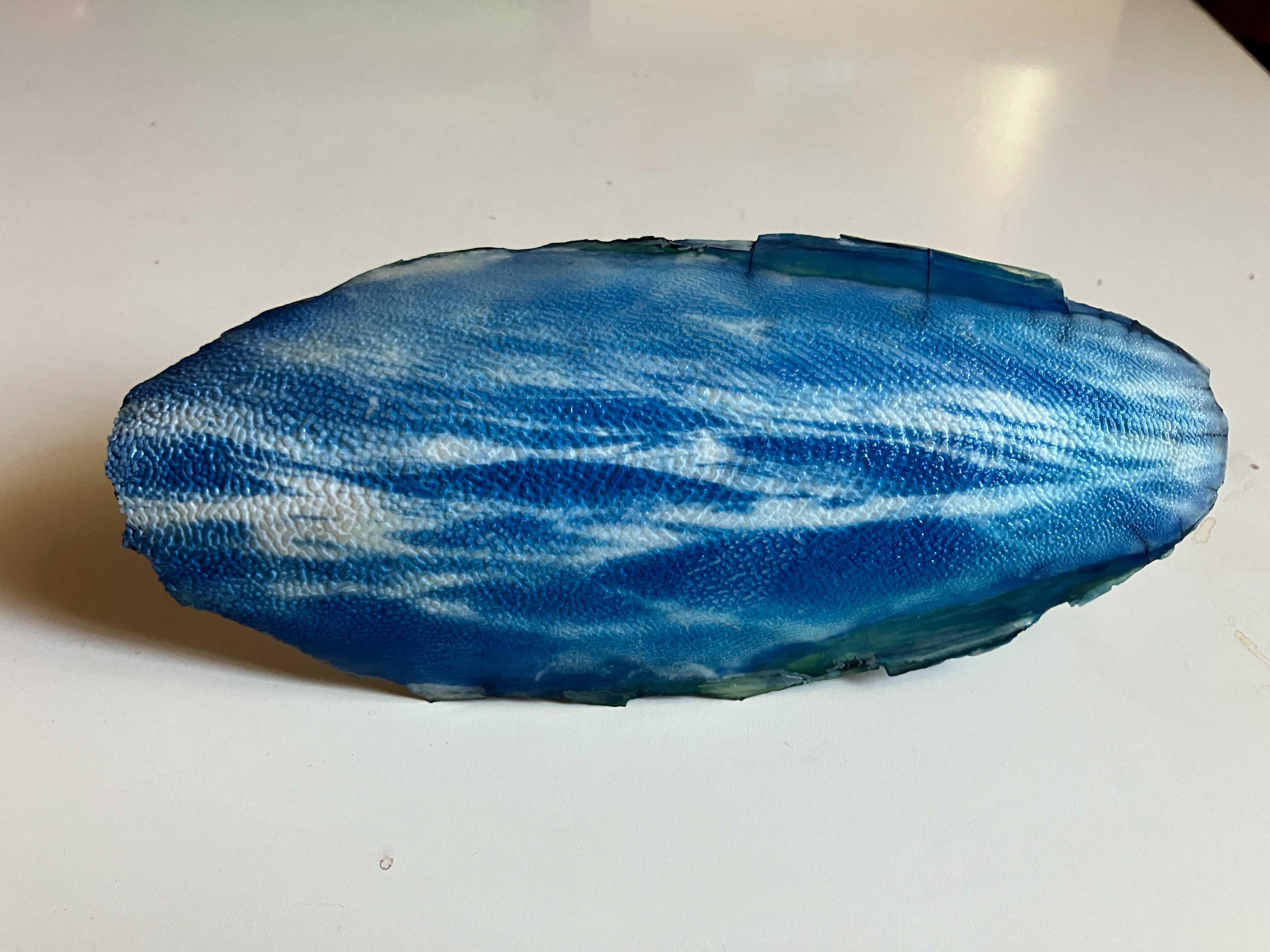
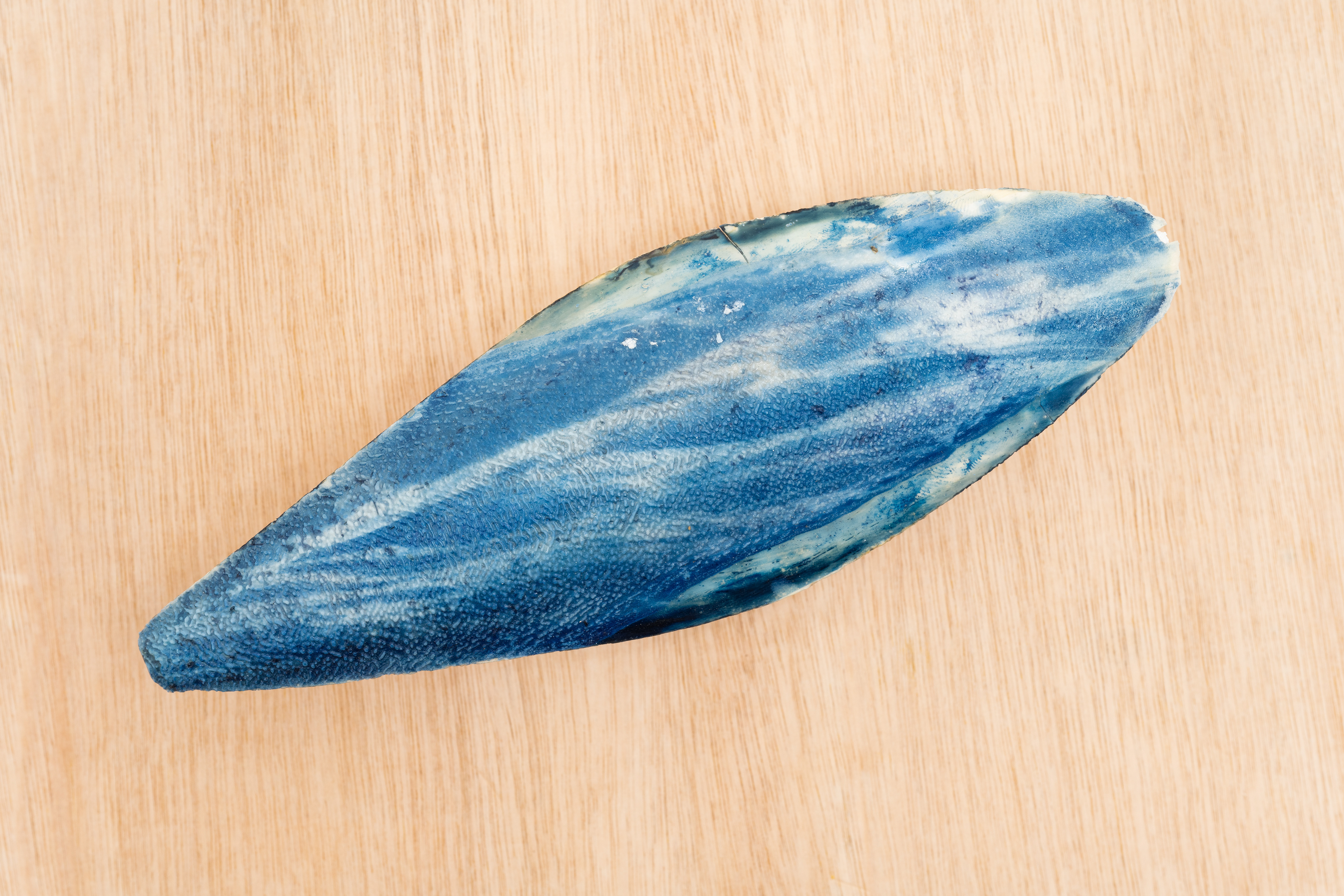
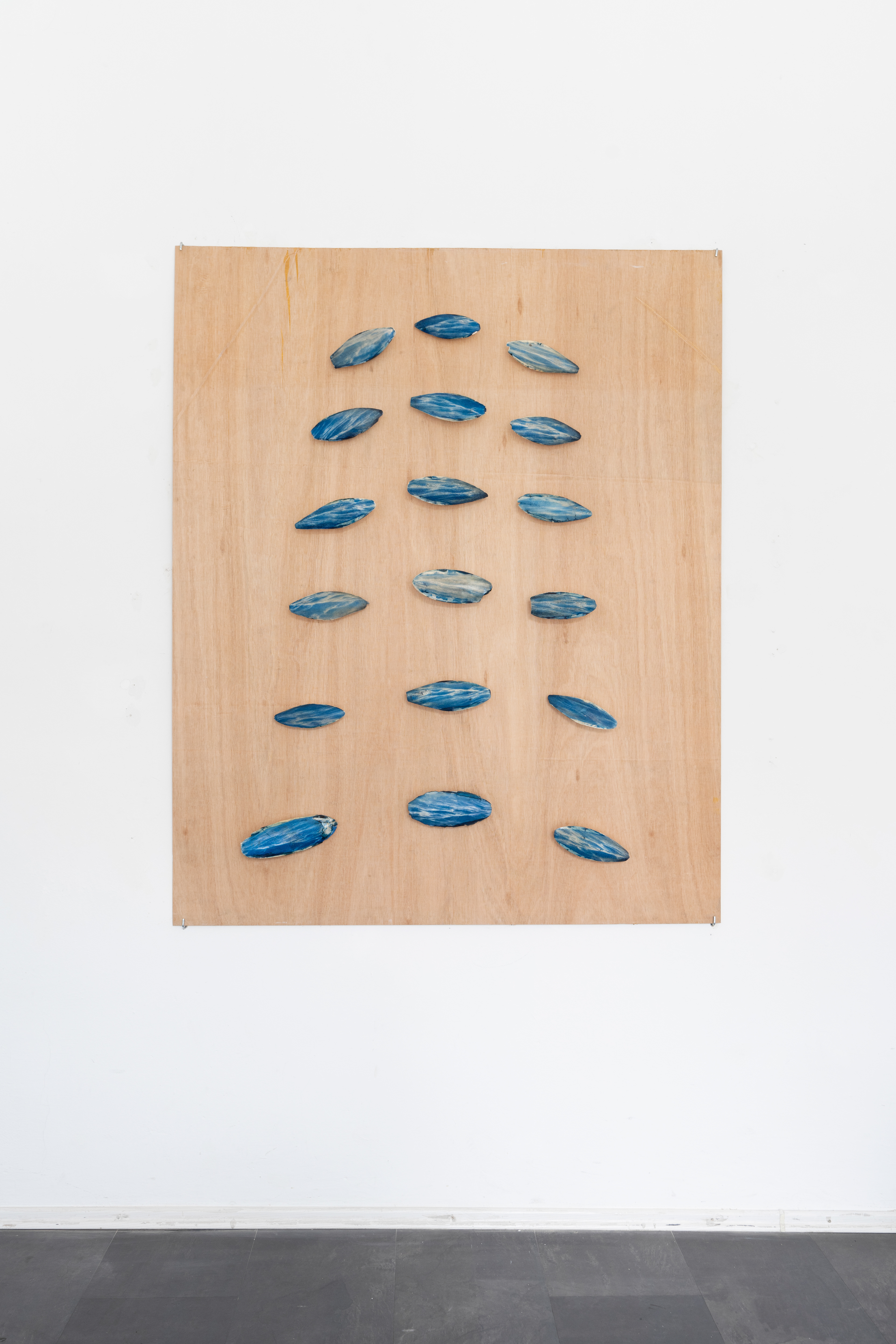
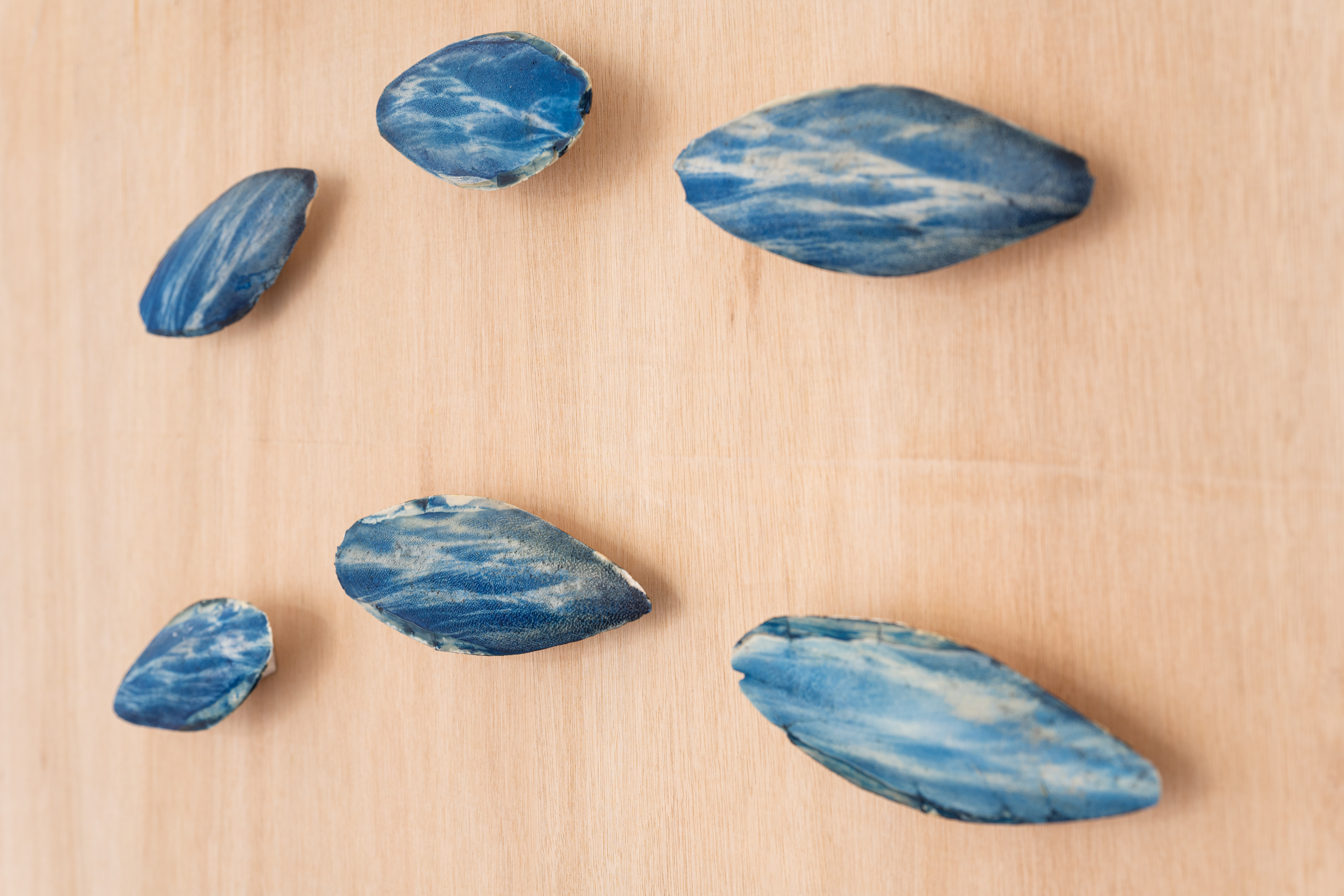
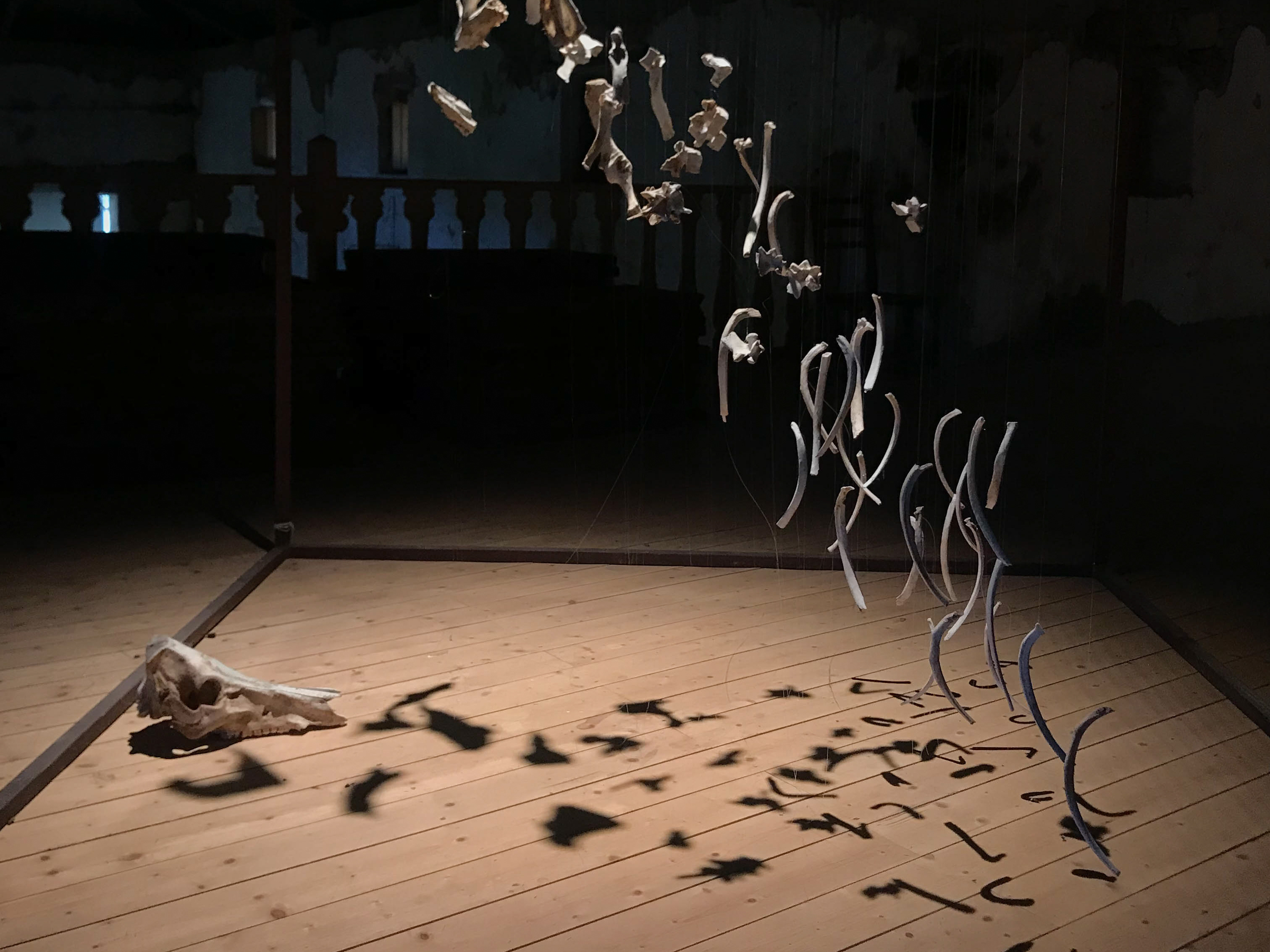
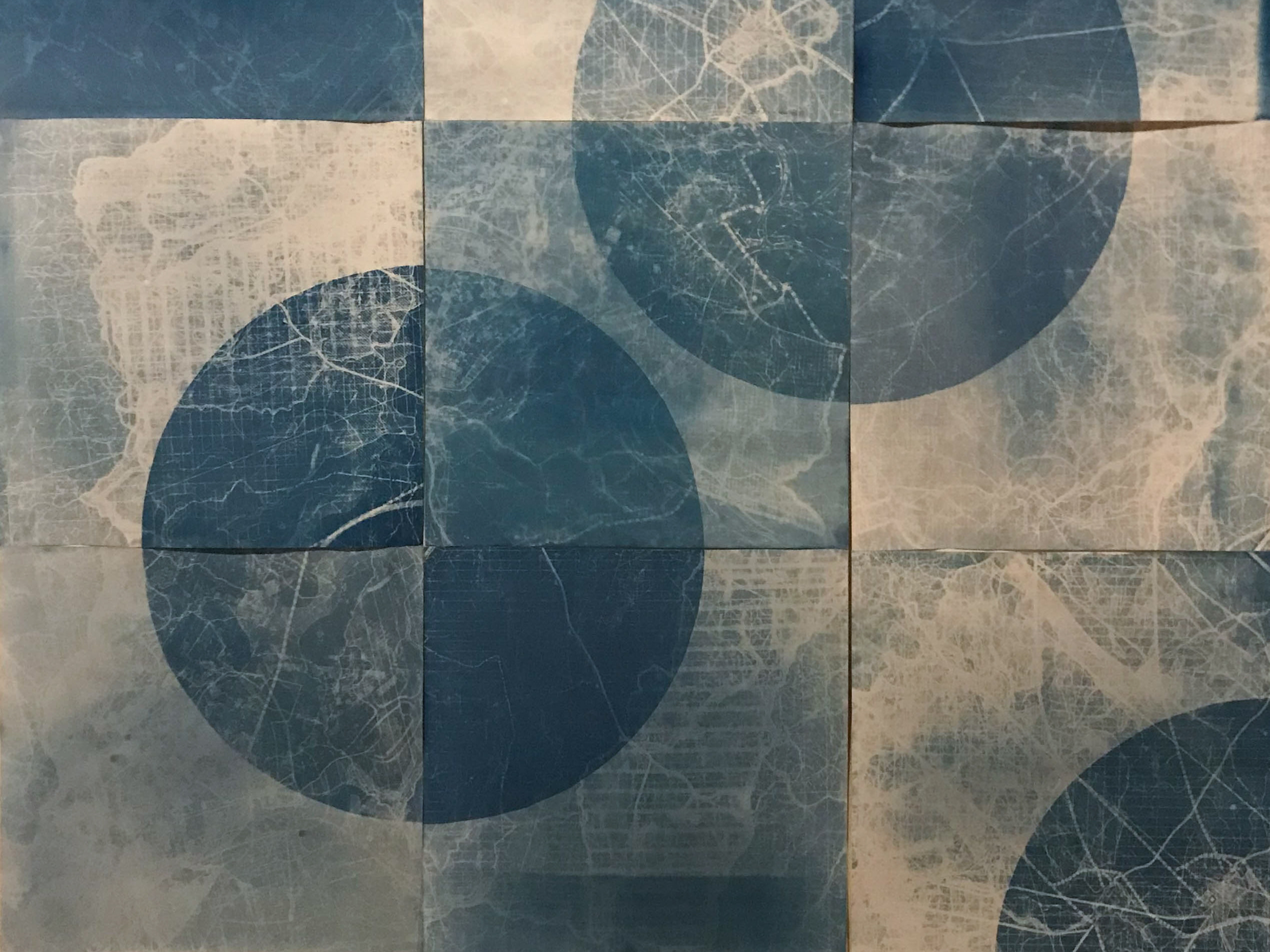
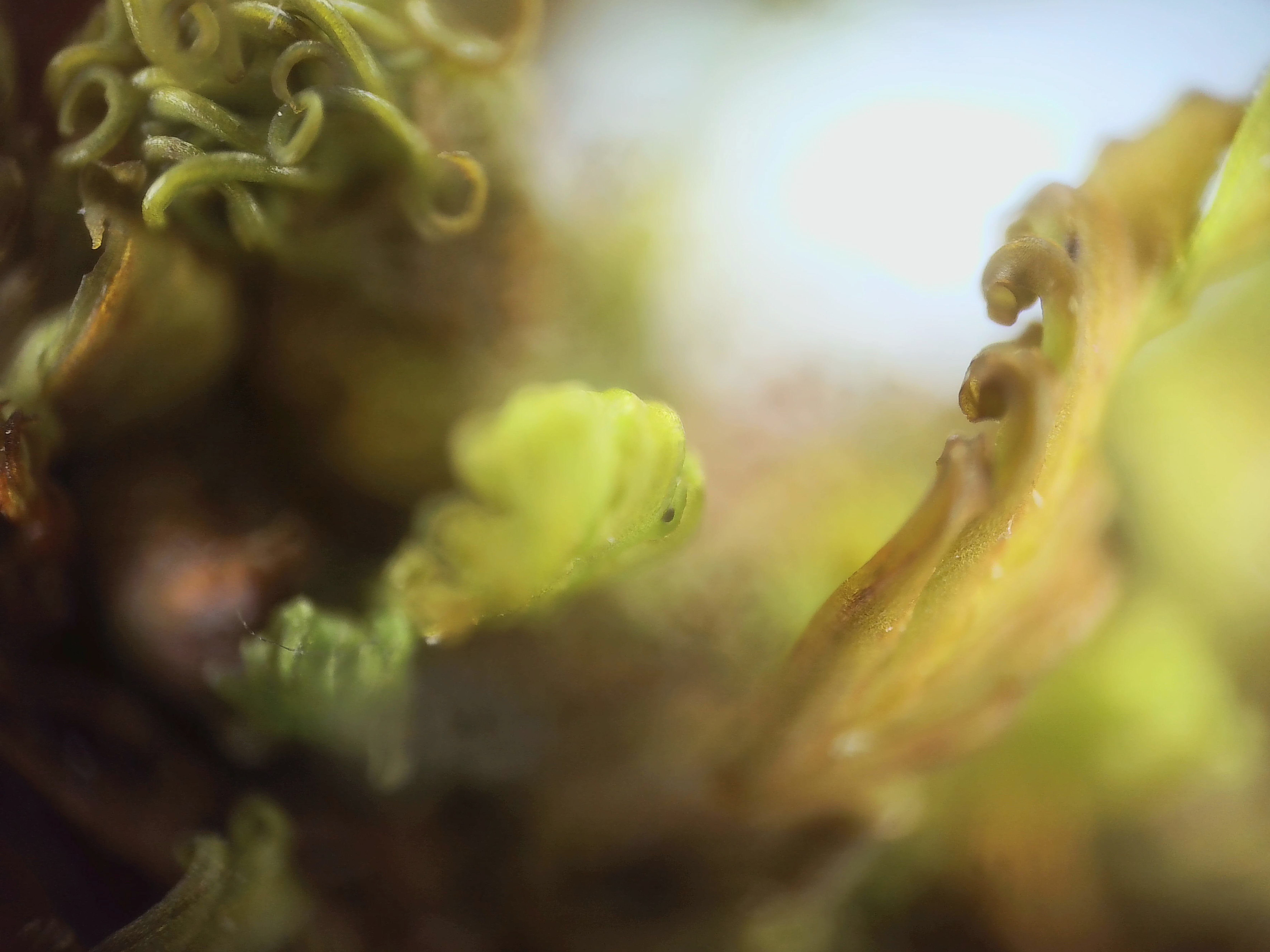
“Sepia Sunlight” is color, repetition and reinvigoration. The internal buoyancy-control system of the Common Cuttlefish (Sepia officinalis), called the cuttlebone, is displayed here in a pattern loosely reminiscent of the evolutionary talents of this fascinating cephalopod. Images of waves from the summertime North Atlantic have been contact printed on these cuttlebones using cyanotype processing. An iron-rich sensitizer is first painted on the white, porous surface of the oblong objects. When exposed to the sun’s ultraviolet light ferric ferrocyanide forms. As the sensitizer is washed away an interesting darker blue color appears. This blue is different from, though reminiscent to, the natural brownish tint of cuttlefish ink, also known as “sepia.” These cephalopod-mollusks squirt sepia to temporarily blind and confuse predators bent on their capture. Sepia ink has been used since Roman times for writing, drawing and, later, as a wash in photography processing to make prints more durable. Exploring the Common Cuttlefish’s complex skills of countershading and camouflage is another driving force behind this project. The body of the cuttlefish contains pigment cells that can change color and pattern to transform their outward appearance to hide from predators. In addition, they can use this technique to hypnotize prey when on the hunt. The cuttlefish off the coast of Portugal, much like other cephalopods, are widely known for their remarkable intelligence. “Sepia Sunlight” is an homage to the fascinating Sepia officinalis—how it flees, hides, lures, rises, dives and hunts throughout its varied environments in the North Atlantic.